




Practising Privileges
For Psychiatrists and Psychologists
Straight to:
At Smart TMS, we recognise the valuable role you play in your patient’s journey. Our goal is to deliver advanced TMS treatments while keeping you—the referring psychiatrist or psychologist—closely involved every step of the way.
Practising Privileges
If you’re a psychiatrist or psychologist who wants to take a more active role or offer TMS services without the need for equipment investment or additional registration, our Practising Privileges Program offers a flexible path to expand your clinical options.
Smart TMS Practising Privileges Program: Build Your Own Virtual Clinic

For psychiatrists and psychologists looking to offer TMS in their own practice, our Smart TMS Practising Privileges Program provides a straightforward way to get started. You gain full clinical oversight, share in treatment revenue, and maintain your practice’s independence—all without the expense and complexity of opening a physical clinic.
Key benefits include:
Initial Assessment Fee: You assess new patients and keep the full fee.
Revenue Share: Receive a share of revenue as your patients complete TMS sessions.
No Upfront Costs: No need to buy equipment, hire staff, or manage regulatory approvals.
Comprehensive Support: Access our facilities, clinical team, administrative assistance, and digital tools while keeping your brand identity.
How it works:
1. Refer and assess each patient, prescribing TMS within our system.
2. Our team connects with the patient to provide treatment.
3. You stay involved for ongoing reviews and updates.
4. You receive both assessment and treatment revenue as care is delivered.
Why Partner with Smart TMS?
- Enhance your practice with advanced, evidence-based therapies.
- Deliver better results through a streamlined, collaborative approach to care.
- Boost your revenue while maintaining full clinical independence.
- Eliminate upfront investments, staffing concerns, and regulatory burdens.
- Support your patients throughout their treatment journey.
Partnerships Guide
Conditions TMS treats
Depression
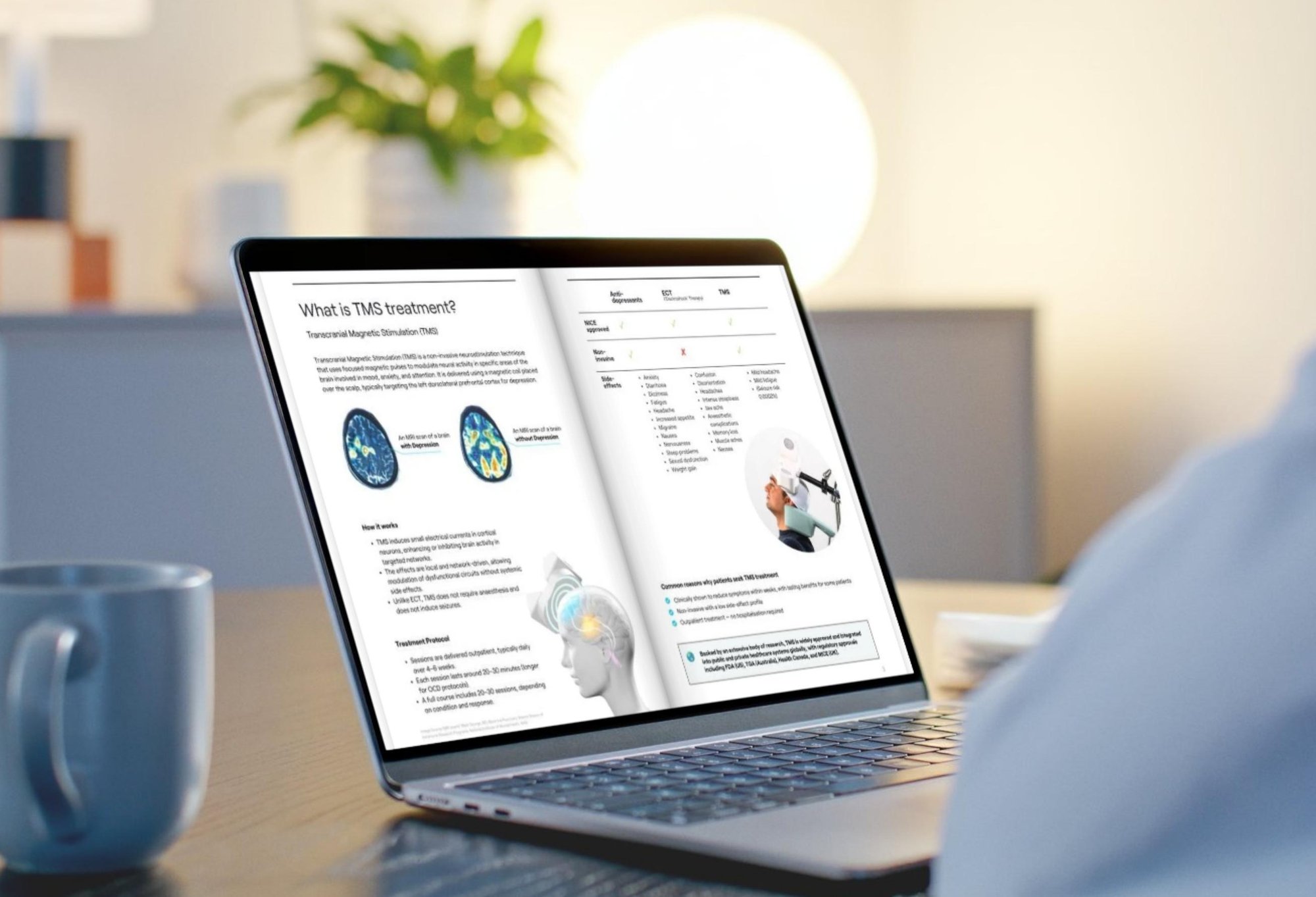
TMS compared to other treatments
| Treatment | TMS | ECT | Antidepressants |
|---|---|---|---|
| Description | Non-invasive magnetic fields | Electrical current to induce seizure | Oral medication |
| NICE approved | ✓ | ✓ | ✓ |
| Non-invasive | ✓ | ✘ | ✓ |
| Outpatient treatment | ✓ | ✘ | ✓ |
| Ongoing recovery | ✓ | ✘ | ✘ |
| Side-effects | Mild headaches Mild fatigue 1 in 50,000 risk of seizures |
Confusion Disorientation Headaches Intense sleepiness Jaw ache Anesthetic complications Memory loss Muscle aches Nausea |
Anxiety Diarrhoea Dizziness Fatigue Headache Increased appetite Migraine Nausea Nervousness Sleep problems Sexual dysfunction Weight gain |
"I have had the opportunity refer some of my patients to Smart TMS. The Patients have come back and fed back that they have had a very comprehensive assessment, detailed explanation for the treatment and its expected effects. It has been impressive to see the patients’ journey. My compliments for Smart TMS"
"I have referred a number of patients to Smart TMS and have been extremely pleased with the outcome. From the efficiency of the referral pathway through the treatment process and advice along the way to the discharge process and aftercare – all patients have reported how at ease and relaxed they felt by the team and were very pleased with the results. I have no hesitation in recommending Smart TMS"
"Everyone I dealt with was extremely friendly, helpful and supportive. Having suffered from treatment resistant depression, I feel I can now face so much of the major stressors in my life. This has been such a successful treatment for me and if you compare it to a recurring prescription of therapy, it works out so much more affordable without any side effects."
Transcranial Magnetic Stimulation FAQs
-
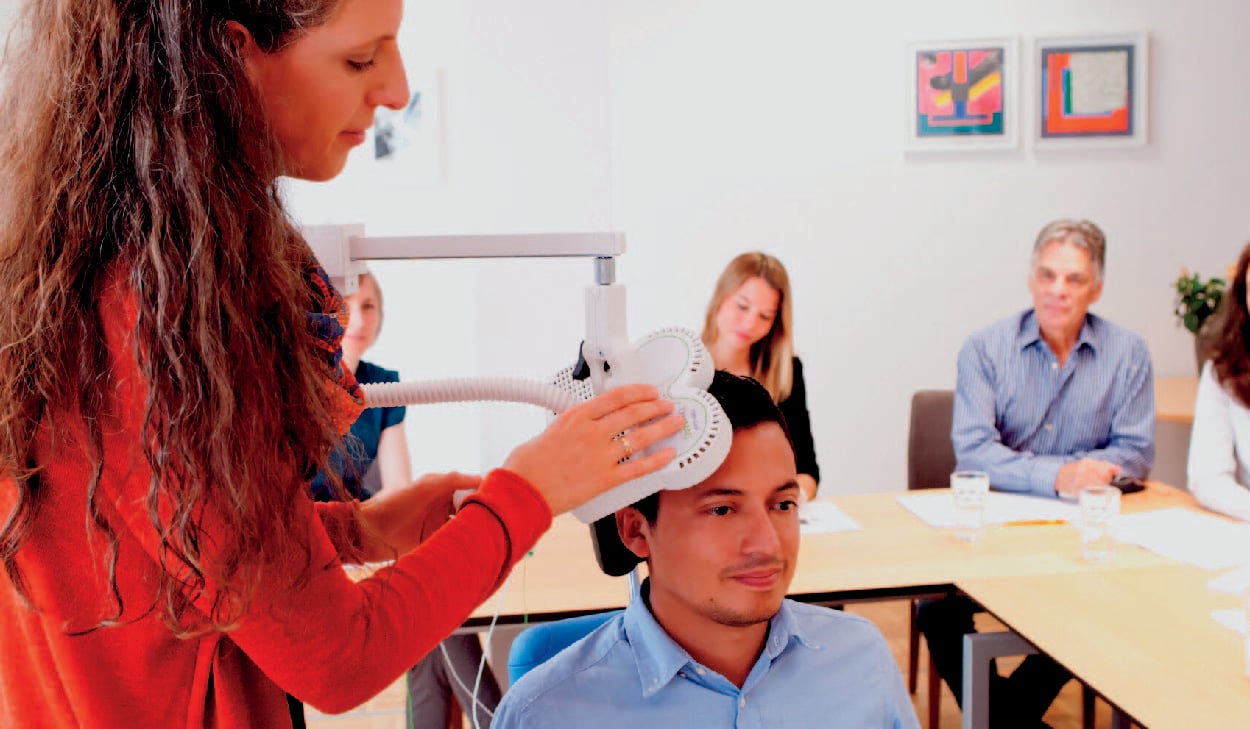
Repetitive Transcranial Magnetic Stimulation (or rTMS for short) is a treatment for depression, OCD, addictions and other mental health conditions. The rTMS machine emits high frequency magnetic pulses to the area of the brain known to cause the condition. The treatment stimulates the brain and causes ‘neuroplasticity’ – which is the brain’s ability to mend and build connections between the nerve cells. In the case of depression, for example, the left side of the prefrontal cortex is stimulated, restoring the connections to help it work as it should, without the symptoms of depression.
-
Although similar, rTMS is more commonly used. Repetitive Transcranial Magnetic Stimulation, which is the NICE approved treatment offered by Smart TMS, uses a magnet referred to by professionals as a ‘figure of eight coil’. This coil emits repetitive magnetic pulses to the specific area of the brain known to cause the condition being treated. In comparison, deep Transcranial Magnetic Stimulation, or dTMS, uses a ‘H-coil’, which looks like a helmet. The magnetic pulses are emitted on a much larger area of the brain as it’s much less focused than rTMS.
-
rTMS is a private treatment and costs vary depending on the condition being treated. An average course of treatment for depression with Smart TMS costs £3,000 and you are likely to need two courses in total.
-
As research progresses, it becomes clear that with regular maintenance sessions (one per month) the benefits of rTMS treatment are on-going. Life can have its ups and downs, but once we know that rTMS treatment works for you, we can offer “top up” sessions whenever you feel you need a boost.
-
There is no research to suggest that rTMS can cause memory loss. rTMS is often compared to ECT (electroconvulsive therapy), which does cause memory loss, however rTMS is non-invasive and only targets a small area of the brain, as opposed to inducing seizures like ECT does.
-
Yes – rTMS is effective in the treatment of Generalised Anxiety Disorder. At Smart TMS, we know that depression and anxiety often go hand in hand, so we offer all patients the opportunity to be treated for both at the same time. Other providers can charge separately for courses of depression and anxiety treatment, but we include them in the same treatment session, saving you (in some cases) thousands of pounds.
-
“Success” is hard to quantify when talking about mental health. The remission rate of patients suffering with depression at Smart TMS is 49%. This means 49% of patients are no longer clinically depressed following rTMS treatment. Our research shows that 56% patients also see a significant change in their mood, even if they don’t officially reach the point of remission, which helps them lead a happy and fulfilling life with fewer symptoms than before.
Professional Training & Partnership Opportunities
Learn more about professional training opportunities through neurocare academy and partnerships with Smart TMS clinics.